
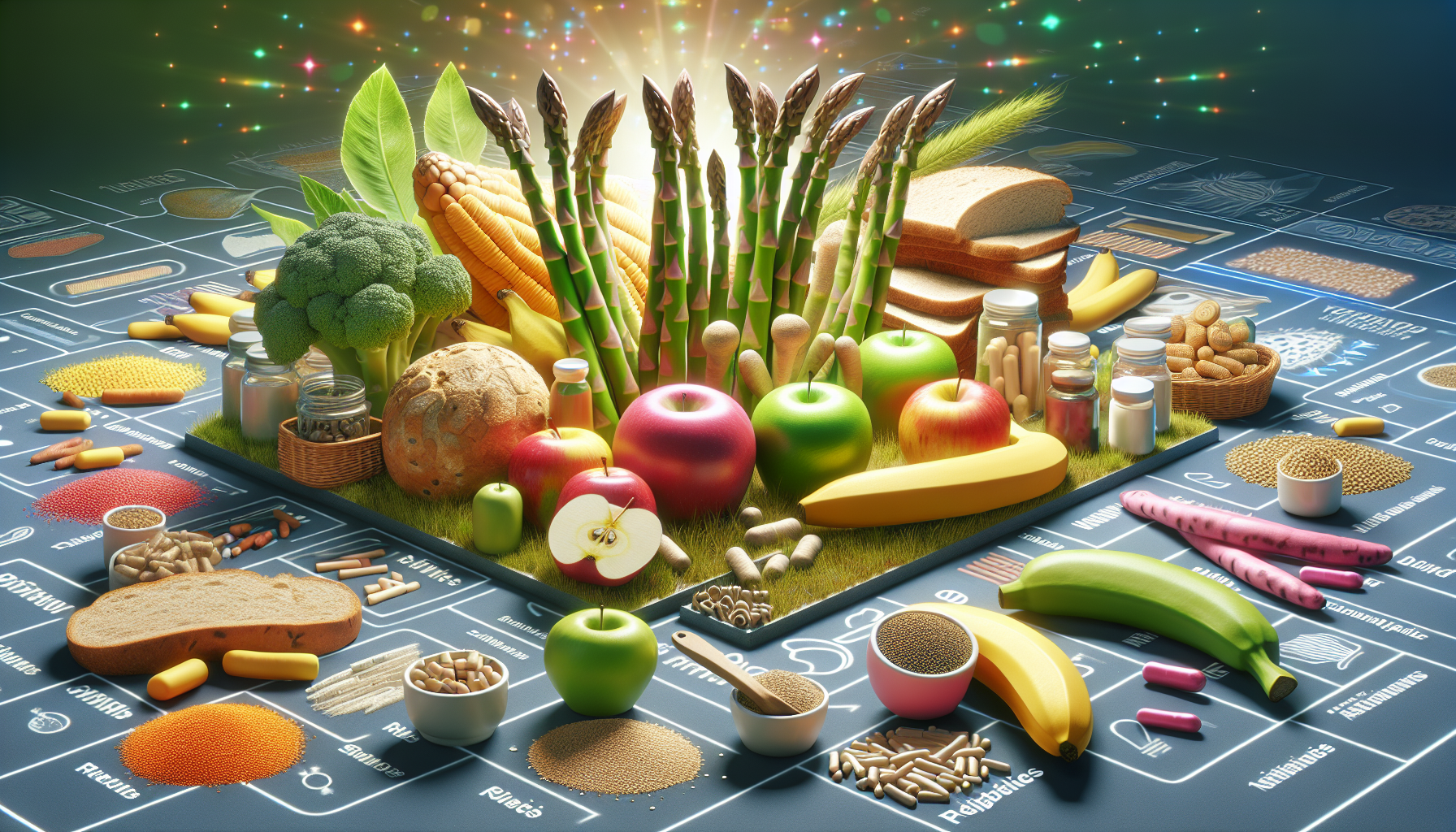
Understanding Prebiotics
What Are Prebiotics?
Prebiotics are specialized plant fibers that act as food for the beneficial bacteria in the gut. Unlike regular dietary fibers, prebiotics are not digestible by the human body, but they play a crucial role in maintaining a healthy gut microbiome. These fibers help stimulate the growth and activity of beneficial microorganisms, ensuring a balanced gut flora.
Common sources of prebiotics include whole grains, bananas, greens, onions, garlic, soybeans, and artichokes. The most well-known prebiotics are inulin, fructo-oligosaccharides (FOS), and galacto-oligosaccharides (GOS).
| Prebiotic Type | Common Food Sources |
|---|---|
| Inulin | Chicory root, onions, garlic |
| FOS | Bananas, onions, garlic |
| GOS | Soybeans, lentils, chickpeas |
Importance of Prebiotics in Gut Health
Prebiotics play a vital role in promoting and maintaining gut health. They act as nutrients for the beneficial bacteria in the gut, which in turn helps to break down and ferment the prebiotic fibers. This fermentation process produces short-chain fatty acids (SCFAs) such as butyrate, acetate, and propionate, which serve as energy sources for the cells lining the colon.
The benefits of prebiotics include:
- Promoting Beneficial Bacteria: Prebiotics help to promote the growth of beneficial bacteria like Bifidobacteria and Lactobacilli in the gut.
- Improving Gut Function: By fostering a healthy gut microbiota, prebiotics can improve digestion and bowel regularity. They are particularly beneficial for individuals suffering from constipation and irritable bowel syndrome (IBS).
- Supporting Immune Function: A healthy gut microbiome is linked to a robust immune system. Prebiotics help to enhance the gut’s barrier function and reduce inflammation, thus supporting overall immune health.
- Boosting Metabolic Health: Prebiotics can help regulate metabolism by influencing the composition and function of gut bacteria, which in turn can affect weight management and glucose metabolism.
For more information on how prebiotics impact gut microbiota and overall health, check out our article on the health benefits of prebiotics. Additionally, if you’re interested in differentiating between prebiotics and probiotics, visit our detailed guide on prebiotics vs. probiotics.
Sources of Prebiotics
Prebiotics are essential for maintaining a healthy gut microbiome. They can be found in various natural foods or taken as synthetic prebiotic supplements. Understanding these sources can help individuals make informed choices about their gut health.
Natural Food Sources of Prebiotics
Natural food sources of prebiotics are typically high-fiber foods that are incorporated into a balanced diet. These plant fibers stimulate the growth of beneficial bacteria in the digestive tract, promoting overall gut health. Some common natural sources include:
| Food | Prebiotic Content (g per 100g) |
|---|---|
| Garlic | 17.5 |
| Onions | 8.6 |
| Bananas | 0.5 |
| Whole Oats | 5.0 |
| Apples | 2.4 |
| Asparagus | 2.0 |
| Jerusalem Artichokes | 18.0 |
| Chicory Root | 47.0 |
| Dandelion Greens | 24.0 |
Data sourced from WebMD and Verywell Health.
These foods are rich in fiber and complex carbohydrates that the body cannot digest. As these fibers pass through the digestive system, they stimulate the growth of healthy bacteria, aiding in digestion, easing constipation, increasing mineral absorption, regulating cholesterol, and strengthening the immune system.
Synthetic Prebiotic Supplements
Synthetic prebiotic supplements provide a convenient alternative for those who may not regularly consume enough prebiotic-rich foods. These supplements are designed to offer the same benefits as natural sources, such as improving digestion and supporting a healthy microbiome.
Prebiotic supplements typically provide around four to five grams of prebiotics per day. It is advisable to start with a low dosage and gradually increase to prevent gas or bloating (Verywell Health).
Benefits of synthetic prebiotic supplements include:
- Supporting gut-related health conditions
- Managing high blood sugar levels
- Enhancing mineral absorption
- Strengthening the immune system
For individuals seeking to combine prebiotics with probiotics, synbiotic therapy can be an effective approach. This method involves the combined use of prebiotics and probiotics to maintain a balanced gut microbiome.
For more information on the health benefits of prebiotics, visit our section on prebiotics and gut health. Additionally, learn more about the synergistic effects of prebiotics and probiotics in our article on prebiotics vs. probiotics.
By incorporating both natural food sources and synthetic supplements, individuals can effectively support their gut health and overall well-being.
Health Benefits of Prebiotics
Impact on Gut Microbiota
Prebiotics play a crucial role in maintaining a healthy gut microbiota. These non-digestible fibers serve as food for beneficial gut bacteria, promoting their growth and activity. According to Healthline, prebiotics influence the composition and function of gut bacteria, leading to a more balanced microbiome.
The positive impact of prebiotics on gut microbiota can result in various health benefits, including improved digestion and enhanced immune function. By feeding good bacteria, prebiotics help produce short-chain fatty acids like butyrate, acetate, and propionate, which are essential for colon health.
Effects on Disease Risk
Prebiotics may also play a role in reducing the risk of certain diseases. Research suggests that a healthy gut microbiota, supported by prebiotics, can lower the risk of developing colon cancer, inflammatory bowel disease, and type 2 diabetes.
In addition to their impact on the gut, prebiotics can help reduce inflammation and strengthen the immune system. This can have implications for preventing allergies and reducing symptoms of conditions like eczema (WebMD).
Role in Metabolic Health
Prebiotics contribute to metabolic health by supporting the production of short-chain fatty acids, which have various beneficial effects on the body. These fatty acids can improve insulin sensitivity, regulate appetite, and enhance fat metabolism.
Furthermore, prebiotics may assist in the absorption of calcium, which is crucial for bone health. This can help reduce the risk of osteoporosis and fractures, particularly in older adults.
| Health Benefit | Description |
|---|---|
| Improved Digestion | Enhances gut microbiota and produces short-chain fatty acids. |
| Reduced Disease Risk | Lowers risk of colon cancer, inflammatory bowel disease, and type 2 diabetes. |
| Enhanced Immune Function | Reduces inflammation and strengthens the immune system. |
| Better Metabolic Health | Improves insulin sensitivity and fat metabolism. |
| Stronger Bones | Assists in calcium absorption, reducing the risk of osteoporosis. |
For more information on incorporating prebiotics into your diet, visit our article on prebiotics. Additionally, learn about the differences between prebiotics and probiotics in our section on prebiotics vs. probiotics.
Prebiotics vs. Probiotics
Understanding the difference between prebiotics and probiotics is essential for anyone looking to enhance their gut health. Each plays a unique role in maintaining a healthy digestive system.
Differentiating Between Prebiotics and Probiotics
Prebiotics are specialized plant fibers that stimulate the growth of healthy bacteria in the digestive tract. They consist mainly of fiber or complex carbohydrates that the body cannot digest. These fibers serve as food for the beneficial bacteria in the gut. Common prebiotics include inulin, fructo-oligosaccharides (FOS), and galacto-oligosaccharides (GOS). They can be found in foods like garlic, asparagus, and soybeans.
Probiotics, on the other hand, are live bacteria and yeasts that have beneficial effects on the body. These microorganisms help fight off less friendly bacteria and boost immunity against infections. They are often recommended after finishing a course of antibiotics or in cases where the microbiome has been weakened. Probiotics can be found in fermented foods like yogurt, kefir, and sauerkraut, as well as in supplement form.
| Attribute | Prebiotics | Probiotics |
|---|---|---|
| Definition | Non-digestible fibers that feed beneficial bacteria | Live beneficial bacteria and yeasts |
| Source | Foods like garlic, asparagus, soybeans | Fermented foods like yogurt, kefir, sauerkraut |
| Function | Stimulate growth of healthy gut bacteria | Boost immunity, fight harmful bacteria |
| Forms | Inulin, FOS, GOS | Various strains of bacteria and yeast |
Synergistic Effects of Prebiotics and Probiotics
The combination of prebiotics and probiotics can have a synergistic effect, enhancing overall gut health. Prebiotics act as food for probiotics, allowing them to thrive and function more effectively. This relationship is essential for maintaining a balanced gut microbiota, which can improve digestion, boost the immune system, and reduce the risk of various health conditions.
Research shows that consuming prebiotics along with probiotics can support the composition of bacteria in the gut, increase beneficial bacteria, and decrease harmful ones. This combination, often referred to as synbiotics, offers a comprehensive approach to gut health, ensuring that probiotics have the necessary nutrients to thrive.
For more information on prebiotics and how to incorporate them into your diet, visit our prebiotics page. Additionally, learn more about the health benefits of prebiotics and how they can improve your overall well-being.
Prebiotics and Gut Conditions
Prebiotics for Constipation and IBS
Prebiotics are known to improve certain gut conditions, such as constipation and irritable bowel syndrome (IBS), by stimulating the growth of beneficial bacteria and enhancing aspects of gut health. Prebiotics are fibers that aren’t digestible by the body but help good bacteria grow in the gut. Established prebiotics include inulin, fructo-oligosaccharides (FOS), and galacto-oligosaccharides (GOS).
Some researchers suggest that prebiotics might play a role in the treatment of IBS and inflammatory bowel disease (IBD). While some evidence implies that prebiotics could worsen IBS symptoms due to high FODMAP content, other studies suggest they might help ease gut inflammation and symptoms in IBD patients.
| Prebiotic Type | Potential Benefits for IBS |
|---|---|
| Inulin | Promotes growth of beneficial bacteria |
| FOS | Enhances gut health |
| GOS | Reduces gut inflammation |
Consuming prebiotics appears to be safe, with mild side effects such as gas, bloating, or abdominal pain. These side effects typically diminish as the digestive system adapts to the change in the intestinal environment. For more on managing gut health, see our article on prebiotics.
Prebiotics and Metabolic Health
Prebiotics also play a role in metabolic health. They may help with digestive disorders, enhance calcium absorption, improve immune function, prevent allergic conditions, lower cholesterol, enhance brain function, and reduce the risk of colon cancer (Verywell Health). However, the role of prebiotics in general health remains uncertain, with many health claims being weakly supported.
For adults looking to support their biome, incorporating prebiotics into the daily diet through whole grains, fruits, and vegetables is beneficial. Prebiotic supplements typically provide around four to five grams per day. It is advisable to start with a low dosage and increase gradually to prevent gas or bloating. Synbiotic therapy, involving the combined use of prebiotics and probiotics, can help maintain probiotic levels in the gut. For more on this, check out our article on prebiotics.
| Health Benefit | Prebiotic Impact |
|---|---|
| Calcium Absorption | Enhances absorption |
| Immune Function | Improves function |
| Cholesterol Levels | Lowers levels |
| Brain Function | Enhances function |
| Colon Cancer Risk | Reduces risk |
Prebiotics show promise in supporting gut and metabolic health. To learn more about the health benefits of prebiotics, visit our prebiotics section.
Prebiotic-Rich Foods
Best Foods for Prebiotics
Prebiotics are specialized plant fibers that promote the growth of healthy bacteria in the digestive tract. They are found in various foods, which can be beneficial for gut health Verywell Health. Below is a list of some of the best foods rich in prebiotics:
| Food | Prebiotic Fiber Content |
|---|---|
| Chicory Root | 68% of its fiber content |
| Garlic | Contains inulin and fructooligosaccharides |
| Onions | Contains inulin and fructooligosaccharides |
| Asparagus | Contains inulin |
| Bananas | Contains fructooligosaccharides |
| Oats | Contains beta-glucan and resistant starch |
| Apples | Contains pectin |
| Jerusalem Artichoke | Contains inulin |
| Leeks | Contains inulin and fructooligosaccharides |
These foods are not only rich in prebiotics but also offer additional nutrients and fiber essential for overall health Healthline.
Incorporating Prebiotic-Rich Foods into Your Diet
Incorporating prebiotic-rich foods into your diet can be simple and enjoyable. Here are some practical ways to include these foods in your daily meals:
- Breakfast: Add sliced bananas or apples to your oatmeal or yogurt. You can also use oats to make overnight oats or smoothies.
- Lunch: Incorporate onions, garlic, and leeks into soups, salads, or sandwich fillings.
- Dinner: Use asparagus or Jerusalem artichoke as a side dish. They can be roasted, steamed, or added to stir-fries.
- Snacks: Snack on raw garlic with hummus, or enjoy an apple with nut butter.
For those looking to enhance their gut health further, synthetic prebiotic supplements can serve as an additional source. It is advisable to start with a low dosage and gradually increase it to avoid potential side effects like gas or bloating. For more on how to balance your gut health with prebiotics, check out our detailed guide on prebiotics.
By including a variety of prebiotic-rich foods in your diet, you can support your gut microbiota, improve digestion, and potentially enhance overall health. For more information on related topics, explore our articles on prebiotics and prebiotics.