
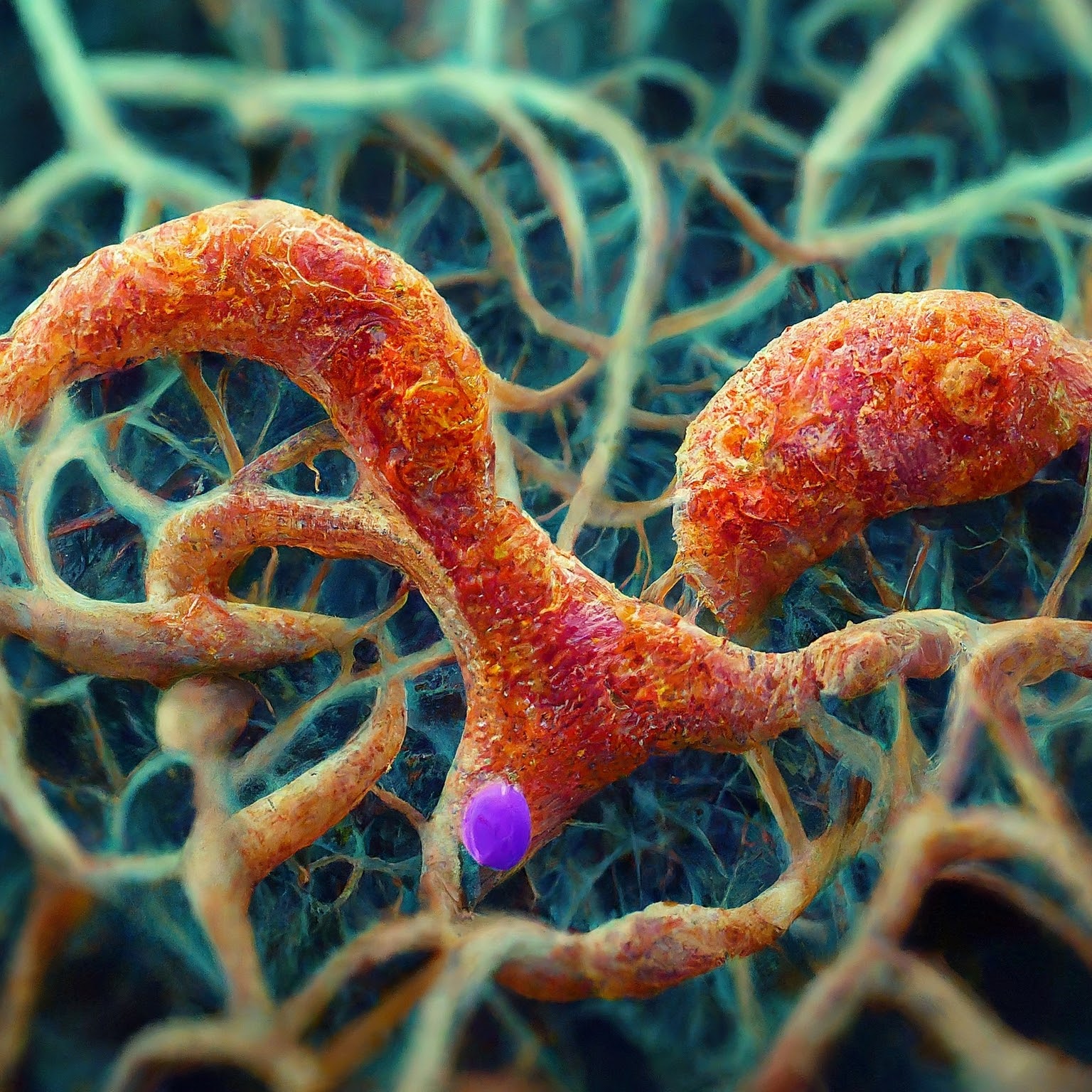
You are more than just human; you’re a complex ecosystem. Residing within you are trillions of microorganisms, including a staggering 38 trillion bacteria, which together constitute half of your cellular makeup. 1 This vast assembly of microbes, known as your microbiota. This invisible community is not just a passive passenger; it plays a crucial role in your overall health, inhabiting not just your gut but also your skin, mouth, and even your armpits. 2
How You Acquire Your Microbial Partners
Your first interaction with microbes occurs surprisingly early. At birth, through the natural processes of delivery, skin contact, and breastfeeding, your mother initiates the crucial “seeding” of your microbiome. This initial microbial mix is foundational, setting up your body’s defenses and gut health. As life progresses, every handshake, every pet you stroke, even the air you breathe contributes new characters to this microscopic society. By the time you’re a toddler, your microbiome stabilizes, resembling the one you’ll carry into adulthood. 3,4
Bacteria: The Unsung Heroes Within Us
Contrary to the common belief that bacteria are harmful, the majority of these microscopic inhabitants are either neutral or beneficial to our health. They are industrious workers in the gut, where they help maintain the integrity of the intestinal barrier, produce vital nutrients such as B vitamins and vitamin K, and even defend against pathogens. 5 These microbes are not only crucial for digestion but also play an integral role in regulating inflammation and supporting the immune system. Our understanding of these microbial functions continues to evolve, shedding light on how they might influence everything from our mental health to our circadian rhythms.6,7
The Gut Barrier: Your Internal Shield
Your gut is lined by a single layer of epithelial cells, protected by a robust mucus layer, forming a critical barrier that absorbs nutrients and blocks harmful substances. Covering a surface area as large as half a badminton court and only a cell-wall thick, this barrier is fortified by your microbiome. Bacteria in your gut maintain its integrity, prevent “leaky gut” syndrome, and protect against toxins and pathogens that trigger immune responses such as allergies or irritable bowel syndrome.8, 9
Maintaining Microbial Health
Despite the essential roles they play—from aiding digestion and producing vitamins to protecting against pathogens—the ideal microbiome composition remains undefined. 10 Every person’s microbiome is unique, influenced daily by diet, exercise, and other lifestyle factors. Instead of striving for a mythical ‘perfect’ microbiome, the focus should be on fostering a microbiome that optimally supports your health. This includes considering how your diet affects not only you but also the billions of bacteria residing within you. 11,12
In summary, our understanding of the microbiome is transforming our approach to health, hygiene, and medicine. Recognizing ourselves as superorganisms—half human, half bacterial—invites a profound shift in how we view our bodies and manage our well-being. 13, 14 This new biology suggests a symbiotic relationship with our microbial guests, underscoring the importance of nurturing this alliance for our health.
Citations:
- Heiman, M.L.; Greenway, F.L. A Healthy Gastrointestinal Microbiome Is Dependent on Dietary Diversity. Mol. Metab. 2016, 5, 317–320. [Google Scholar] [CrossRef] [PubMed]
- National Institutes of Health (NIH)—Human Microbiome Portfolio Analysis Team. A Review of 10 Years of Human Microbiome Research Activities at the US National Institutes of Health, Fiscal Years 2007–2016. Microbiome 2019, 7, 31. [Google Scholar] [CrossRef] [PubMed]
- Integrative HMP; Proctor, L.M.; Creasy, H.H.; Fettweis, J.M.; Lloyd-Price, J.; Mahurkar, A.; Huttenhower, C. The Integrative Human Microbiome Project. Nature 2019, 569, 641–648. [Google Scholar] [CrossRef] [Green Version]
- Dietert, R.R. The Human Superorganism: How the Microbiome Is Revolutionizing the Pursuit of a Healthy Life; Dutton: New York, NY, USA, 2016. [Google Scholar]
- Dietert, R.R. Safety and Risk Assessment for the Human Superorganism. Hum. Ecol. Risk Assess. 2017, 23, 1819–1829. [Google Scholar] [CrossRef] [Green Version]
- Dietert, R.R.; Dietert, J.M. Twentieth Century Dogmas Prevent Sustainable Healthcare. Am. J. Biomed. Sci. Res. 2021, 13, 409–417. [Google Scholar]
- Coleman, M.; Elkins, C.; Gutting, B.; Mongodin, E.; Solano-Aguilar, G.; Walls, I. Microbiota and Dose Response: Evolving Paradigm of Health Triangle. Risk Anal. 2018, 38, 2013–2028. [Google Scholar] [CrossRef]
- Dietert, R.R.; Silbergeld, E.K. Biomarkers for the 21st Century: Listening to the Microbiome. Toxicol. Sci. 2015, 144, 208–216. [Google Scholar] [CrossRef] [Green Version]
- Dietert, R.R. A Focus on Microbiome Completeness and Optimized Colonization Resistance in Neonatology. NeoReviews 2018, 19, 78–88. [Google Scholar] [CrossRef]
- Sleator, R.D. The Human Superorganism–of Microbes and Men. Med. Hypotheses 2010, 74, 214–215. [Google Scholar] [CrossRef]
- Blaser, M.J. The Microbiome Revolution. J. Clin. Investig. 2014, 124, 4162–4165. [Google Scholar] [CrossRef] [Green Version]
- Marks, H.; Coleman, M. Scientific Data and Theories for Salmonellosis Dose—Response Assessment. Hum. Ecol. Risk Assess. Int. J. 2017, 23, 1857–1876. [Google Scholar] [CrossRef]
- Coleman, M.E.; Dietert, R.R.; North, D.W.; Stephenson, M.M. Examining Evidence of Benefits and Risks for Pasteurizing Donor Breastmilk. Appl. Microbiol. 2021, 1, 408–425. [Google Scholar] [CrossRef]
- Endt, K.; Stecher, B.; Chaffron, S.; Slack, E.; Tchitchek, N.; Benecke, A.; Hardt, W.D. The Microbiota Mediates Pathogen Clearance from the Gut Lumen after Non-Typhoidal Salmonella Diarrhea. PLoS Pathog. 2010, 6, 1001097. [Google Scholar] [CrossRef] [PubMed] [Green Version]